What Does the Bible Say About Anxiety Part 1: Trusting God to Calm Everyday Anxiety
Part 1 — Steady in the Storm: Anxiety in a Fast-Paced World
Living Under the Weight of Modern Pressure
We live in a time unlike any other in human history. Notifications buzz before our feet touch the ground in the morning. Deadlines, expectations, and responsibilities pile on with unrelenting speed. Even in moments meant for rest, our minds rehearse what we have not yet completed, what might go wrong, or what others expect from us. This constant state of mental vigilance creates an inner environment where anxiety grows quietly—and sometimes overwhelms loudly. Many people find themselves asking, What Does the Bible Say About Anxiety? (And How to Overcome It), as they seek hope and guidance in challenging times.
While anxiety is not new to the human experience, the pace of modern life magnifies it. The pressure to perform, respond instantly, stay connected, and remain productive at all times can leave even the strongest believer feeling stretched thin. Many Christians silently carry the fear that their anxiety is a spiritual failure or a sign of weak faith. Yet Scripture offers a compassionate, realistic view of human frailty. God does not shame His people for experiencing fear; instead, He invites them into His presence, offering Himself as their peace in the midst of turmoil.
Jesus recognized the weight of earthly cares when He asked, “Which of you by taking thought can add one cubit unto his stature?” (Matthew 6:27, KJV). His question was not dismissive; it was freeing. Worry does not increase our control—it exposes our longing for security. Christ speaks directly to that longing, not with condemnation but with an invitation to trust.
A World that Moves Faster Than the Soul
Human beings were not designed for constant acceleration. God created us with rhythms of work and rest, focus and stillness, movement and Sabbath. Yet today, those rhythms are often disrupted or ignored entirely. People scroll late at night, answering emails or absorbing headlines that keep the heart stirred long after the body stops moving. A parent may lie awake replaying the day’s conflicts. A student may fear falling behind academically or socially. A professional may worry that one mistake could jeopardize future opportunities.
This is the soil in which anxiety takes root—not necessarily because our faith is weak, but because our environment is unrelenting. The soul becomes weary long before the schedule slows down.
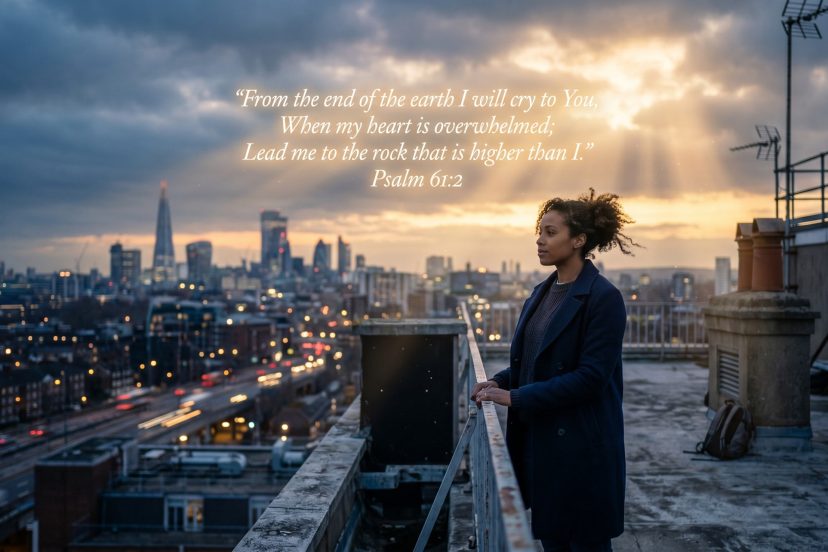
God’s Word acknowledges this tension. The Psalmist declared, “When my heart is overwhelmed: lead me to the rock that is higher than I” (Psalm 61:2, KJV). The overwhelming of the heart is not treated as unusual; it is treated as an invitation to lean on a higher, stronger foundation. Anxiety becomes not a sign of failure but a reminder that we need God’s presence more deeply than we need perfect control.
The Quiet Toll of Invisible Burdens
Some types of anxiety are loud and unmistakable—tightness in the chest, racing thoughts, or panicked breathing. But many people live with a quieter, subtler form of anxiety: the constant hum of internal pressure. It may show up as irritability, restlessness, difficulty concentrating, or the sinking feeling that something important will fall apart if they stop moving.
Consider a young mother juggling work, childcare, and household responsibilities. She meets every need but rarely catches her breath. In quiet moments, she senses a wave of worry rising, reminding her of all the things she must hold together. Or imagine a man who feels responsible for his family’s financial security. He works long hours and carries silent fears about the future. Even during peaceful moments—sitting at the dinner table, reading the Scriptures, or praying—his mind drifts back to the tasks ahead.
These scenarios are deeply human, and the Bible meets them with honesty and compassion. In Psalm 46, God calls His people to “Be still, and know that I am God.” This command is not a reprimand to try harder to be calm. It is an invitation to acknowledge that God remains sovereign even when life demands more than we feel able to give.
Anxiety and Faith: Not Opposites but Opportunities
Many believers worry that anxiety itself is evidence of inadequate trust in God. But Scripture presents a more gracious picture. The Psalms—the prayer book of God’s people—are filled with honest cries of distress, fear, and uncertainty. These prayers model authentic faith: not the absence of anxiety, but the movement toward God in the midst of it.
Jesus Himself, in the Garden of Gethsemane, experienced deep anguish as He faced the cross. While His suffering was entirely unique, His willingness to express distress demonstrates that intense emotional pressure is not foreign to the life of faith. We follow a Savior who understands the full depth of human experience, including the weight of fear.
Hebrews 4:15 (KJV) reminds us: “For we have not an high priest which cannot be touched with the feeling of our infirmities; but was in all points tempted like as we are, yet without sin.” Christ’s empathy is meant to draw anxious believers closer, not push them away.
Thus, anxiety becomes a doorway—an opportunity to deepen trust, not a measure of spiritual inadequacy. The goal is not to eliminate every anxious feeling, but to learn how to anchor ourselves in God’s truth when those feelings arise.
The Invitation to Slow Down Spiritually
Spiritual Takeaway
Anxiety is not a sign that God is absent; it is often evidence that we need His presence more intentionally. In a world that accelerates without pause, God invites us into rhythms of trust that restore the soul and calm the heart.
Reflection Question
Where in your daily life do you feel the pace of the world pulling your heart toward anxiety, and how might God be inviting you to slow down and trust Him more intentionally?
In a fast-paced world, spiritual stillness is not accidental; it is intentional. Developing inner calm requires choosing moments to slow down, breathe, and bring our thoughts under the light of Scripture. The Bible does not propose a quick fix for anxiety, nor does it promise a life free from emotional strain. Instead, it promises God’s faithful presence as we navigate the pressures around us.
When life moves too fast, trust slows us down. When demands escalate, God’s Word reorients our perspective. When fear rises, prayer ushers us into the peace of Christ. This guide will explore how these spiritual practices form a steadying force amid the storms of modern life.